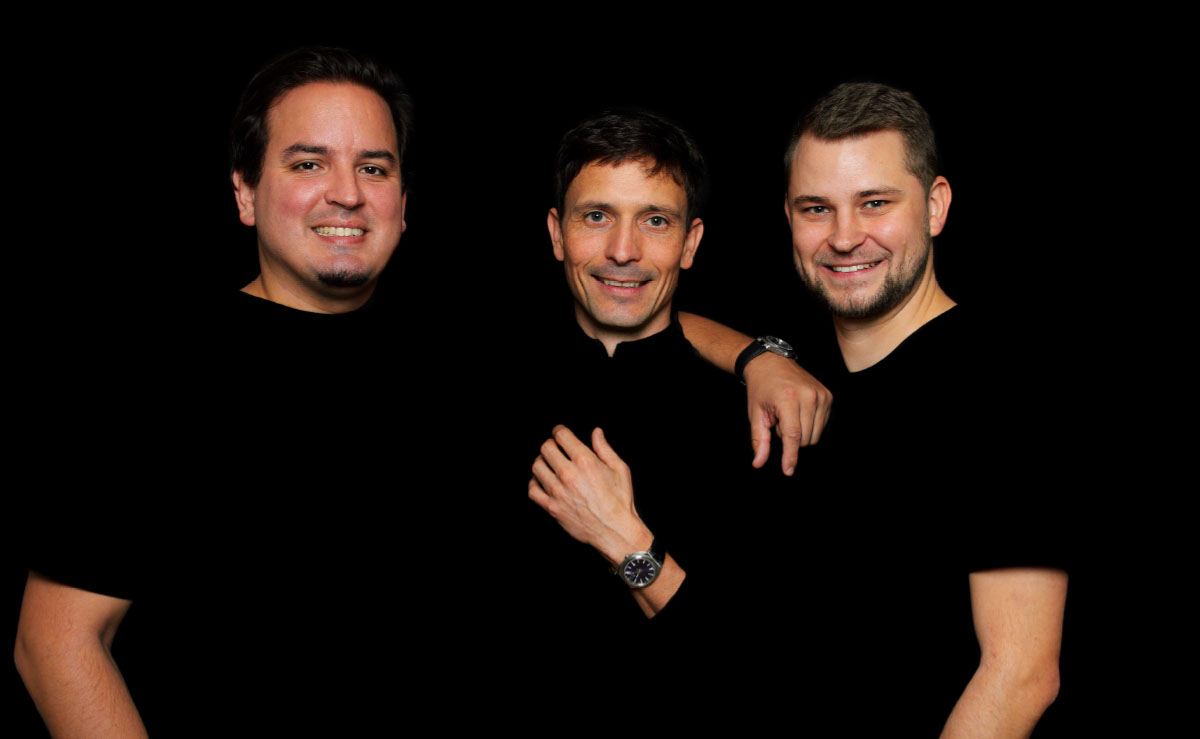
In November 2021, ID Genève has only existed for a few weeks when the New York Times comes to Geneva for a story. One first collection, and already one of the biggest newspapers in the world is paying attention. At the end of the interview, the journalist asks the question every young brand gets asked, the one about what comes next, and Nicolas Freudiger answers without hesitation: "Within three years, I'd like Leonardo DiCaprio to be wearing our watches." She puts it in the article.
Two years later, on October 17, 2023, DiCaprio officially becomes a business partner of ID Genève.
When you ask Nicolas how he pulled it off, he has a simple answer that fits in three words and sums up his entire way of building: "Nothing is luck."
A brand before a product
From the very beginning, Nicolas knew he wanted to launch a watch brand, which is something very different from wanting to make watches, and he draws that distinction himself without anyone needing to point it out.
He has a very precise way of separating the product from the brand, and that distinction explains a great deal about ID. The product, he says, has to respect the attributes of its category, which means a luxury watch has to look like a luxury watch and sit on the wrist like a luxury watch, with no room for fantasy on that front. The brand, on the other hand, is the space where you get to be different, where you choose who you are and who you're talking to.
That's why ID doesn't sell a 4,500-franc watch but a status, and why the person buying it isn't a customer in Nicolas's eyes, but "a climate decision-maker."
The word they banned
We asked him the question we love asking entrepreneurs, the one about words they refuse to use, and he didn't hesitate for a second: sustainability.
It's not that the subject doesn't matter, since the whole brand is built on it, with steel melted in a solar furnace, plant-based leather and a repairable composite made from wind turbine blade offcuts. But the word itself, in his view, has become too loaded, too close to activism, and ID has no intention of being seen as a brand of activists.
"We're not activists, we're solutionists."
The word they prefer is innovation, or more precisely eco-innovation, and Nicolas describes himself as an innovator who wants the brand to be read that way. It's not a matter of vocabulary but a complete positioning, where instead of making people feel guilty, ID shows them there are other ways of doing things, and that those ways are desirable.
He also owns the contradictions that come with it, those of a brand that talks about circularity but has to travel, take planes and show up at Dubai Watch Week, where ID is among the 60 selected brands, in order to exist in global luxury. He doesn't hide from it and says it plainly: "We're full of contradictions." Luxury is still luxury, and to change an industry from the inside, you first have to accept being part of it.
Saying no to money
This is probably the part of the conversation that struck us most, because it tells of something few founders dare to do.
ID Genève has turned down investors, and not because growth was lacking, since it is mostly organic and solid. They said no because some people wanted to put money in on the condition of not being asked for much afterwards, of writing the cheque and waiting for the return without getting involved.
For Nicolas, that is incompatible with what the brand is, because "the mission has to be shared between the investor and the company." He wants smart money, a winning team around the table, people who identify with what ID is trying to do, and DiCaprio is the perfect illustration, since he knows the initiatives, follows them closely, and is even described as very careful about the projects he commits to.
The same logic applies to distribution. Their commercial director built a matrix, and in the top right corner sit the distributors they truly want to work with, the ones Nicolas calls brand builders, people with a vision who understand what they're selling. Today ID is carried by three of the five largest distributors in the world, which for a nine-person brand born in 2020 is the kind of signal no budget can buy.
A strong brand sorts, its customers as much as its investors, and that is precisely what makes it credible.
What he wants to change
In ten years, if ID Genève has succeeded, what will have changed in Swiss watchmaking? He doesn't talk about market share but about narratives. He wants the industry to break down its ESG (Environmental, Social and Governance) silos, to exchange more, and above all to tell a different story from the one it has been telling for a hundred years. He takes the example of solar steel, whose story he finds infinitely more powerful than that of any other precious metal, and he sums it up in one sentence: "The sun has never sent us an invoice, and it will be around for a long time."
And then there are the tests under way, straps made from orange peel, 24-carat gold nano-flakes blended into a biotextile made from cheese production waste. He's wearing one on his wrist as we speak. He'll put it through its paces over the next three months before analysing the results with his teams.
His formula for summing it all up fits in two sentences that say everything about how he sees things: "People often want to take someone's place. We want to show alternatives."
Brick by brick
Nicolas Freudiger doesn't believe in overnight success, the kind that gets shown far too much on social media today, and he says so with the calm of someone who took the time it needed. ID took years, brick by brick, with no shortcuts.
He built a brand before building a product, he decided very early on what it would never be, and he turned down money so it could stay that way.
So we asked him the same question the New York Times journalist had asked: what comes next for the brand?
Without hesitation, Nicolas answered: "Billie Eilish. I'd like her to be wearing our watches in the next few years."
This portrait is part of the series "10 entrepreneurs from French-speaking Switzerland who turned their brand into a weapon," produced by DARE, a branding and consulting agency based in French-speaking Switzerland.